
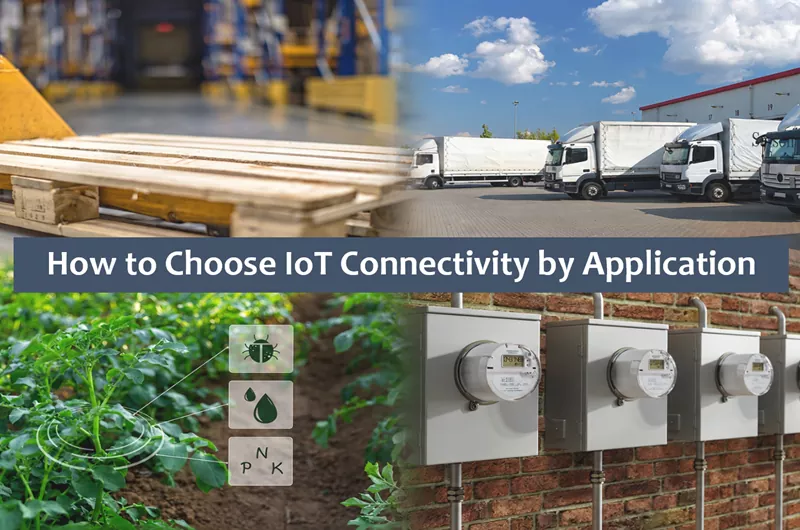
How to Choose IoT Connectivity by Application
When customers start an IoT project, they often ask: “Which connectivity is the best?”
But in real product development, there is no single best option. A GPS tracker, a smart water meter, a disposable BLE label, and an elderly panic button all need very different connectivity solutions. That is why choosing IoT connectivity by application is usually more practical than comparing technologies only by specs.
Why Application Scenario Comes Before Technology
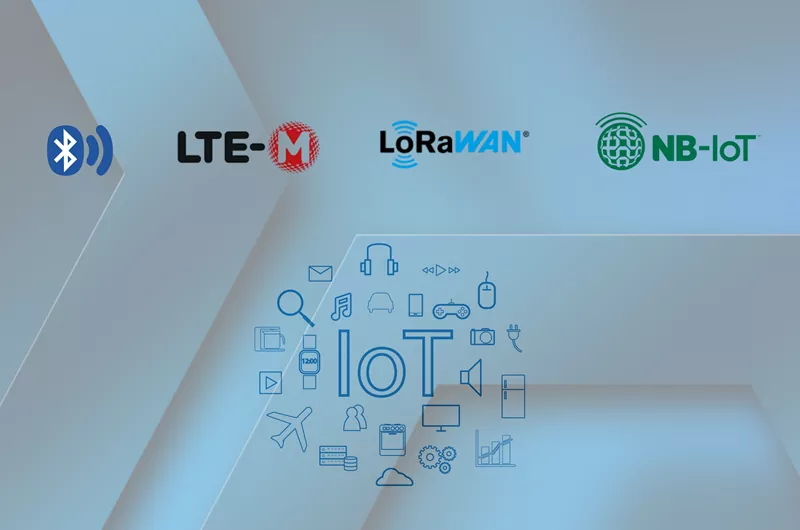
Before choosing BLE, LoRaWAN, LTE-M, NB-IoT, or 4G, the first question should be: where and how will the device be used?
Is it indoor or outdoor? Fixed or moving? Does it need real-time data? Can it connect through a phone or gateway? Which country will it be deployed in?
For example, BLE is great for short-range, low-cost devices. LoRaWAN is useful for long-range, low-power sensors. NB-IoT works well for fixed devices with small data uploads. LTE-M and 4G are better for mobile devices that need wider network coverage.
Asset Tracking and Logistics
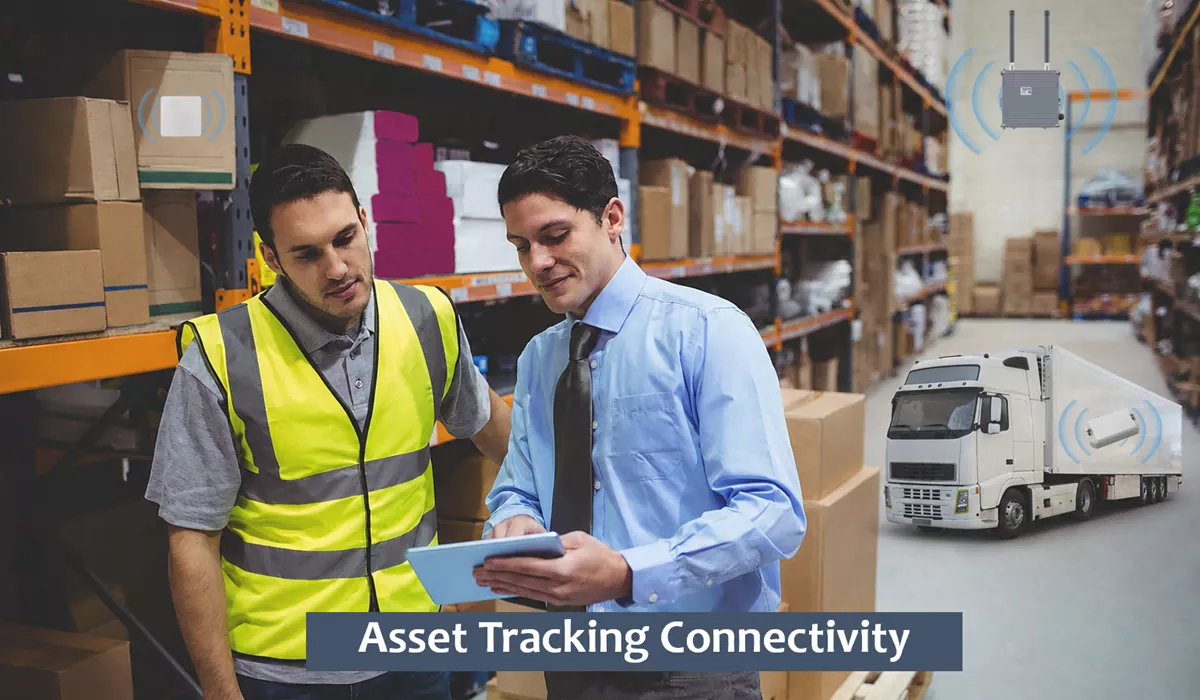
Asset tracking has many different use cases, so asset tracking connectivity also varies.
For indoor asset inventory, BLE asset tracking is usually the most cost-effective choice. BLE tags are small, affordable, and low power. They can be scanned by phones or BLE gateways, making them suitable for tools, cartons, documents, medical assets, and reusable containers.
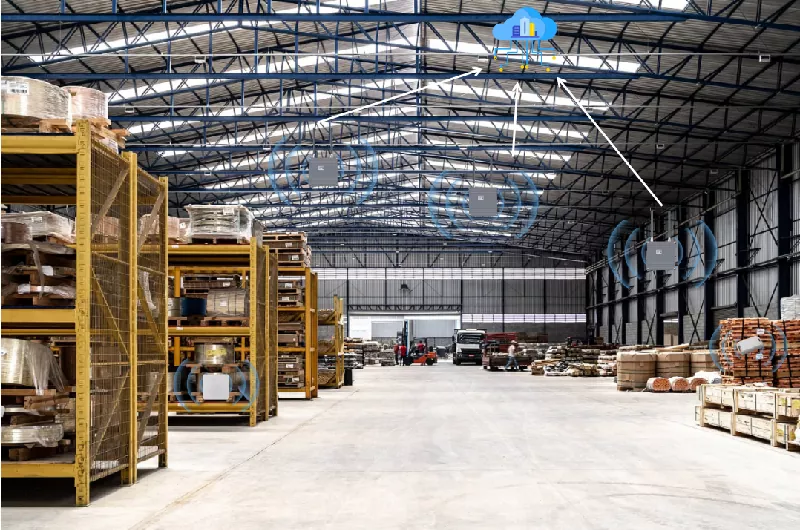
For warehouse, hospital, or factory positioning, BLE + Gateway is often a good solution. BLE tags broadcast signals, and gateways collect the data and upload it to the cloud.
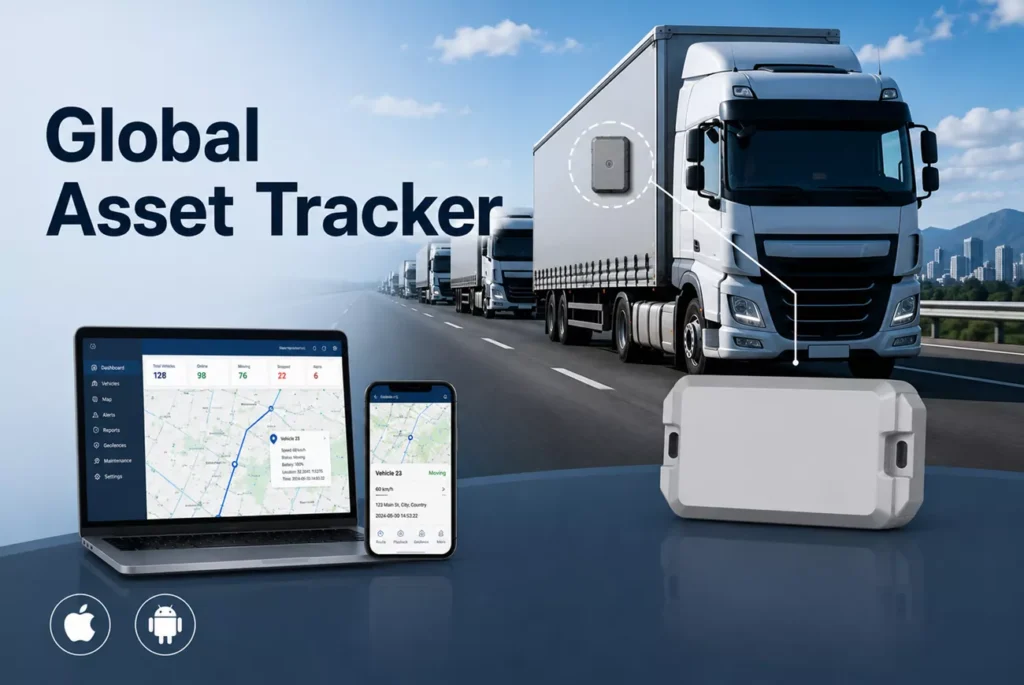
For outdoor assets, such as vehicles, trailers, containers, and construction equipment, an LTE-M GPS tracker, 4G tracker, or NB-IoT tracker is usually more practical because the device needs wide-area network access.
For low-frequency status reporting inside an industrial park, LoRaWAN can also work well, especially when the customer already has LoRaWAN gateways or network coverage.
Smart Metering and Utility Devices
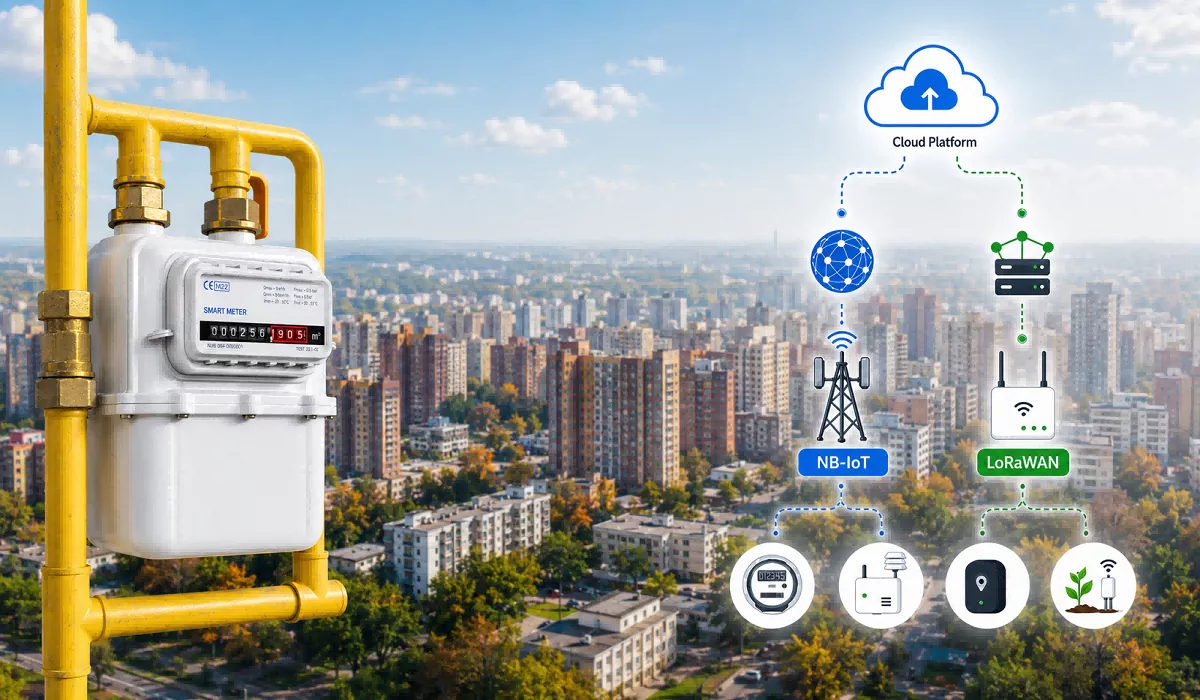
Smart meters are usually fixed in one place and only upload small amounts of data a few times per day. For this type of product, NB-IoT and LoRaWAN are usually better than BLE.
A smart meter NB-IoT solution is suitable for water meters, gas meters, and utility devices that need long battery life and wide-area coverage. LoRaWAN is also a good option when the customer can use private or public LoRaWAN networks.
BLE is more suitable for local meter reading by phone or handheld device, but for automatic remote reading, NB-IoT or LoRaWAN is normally a better fit.
Healthcare and Personal Safety Devices
In hospitals, BLE is widely used for asset management and indoor positioning. Medical devices, wheelchairs, beds, and emergency equipment can use BLE tags, while gateways help staff locate them faster.
For indoor panic buttons or staff safety badges, BLE can also work if gateway coverage is available.
But for elderly care, fall detection, or lone worker safety devices used outside buildings, LTE-M is often more suitable. If the user leaves the room or facility, the device still needs to send alerts through a wide-area network.
Industrial Monitoring and Environmental Sensors
For industrial monitoring, the right connectivity depends on the site.
Inside a factory or warehouse, BLE or LoRaWAN can both be considered. BLE is simple and low cost when gateways are nearby. A LoRaWAN sensor is better for large areas, long distance, and small data packets.
For sensors placed across cities, farms, mines, or outdoor facilities, NB-IoT or LTE-M may be more suitable because they can connect through operator networks without building private gateways everywhere.
Typical applications include temperature monitoring, humidity sensors, vibration sensors, air quality sensors, machine status monitoring, and energy data collection.
Consumer IoT and Smart Home Devices
For consumer IoT and smart home products, BLE is still one of the most practical choices.
BLE works well for phone pairing, app control, smart tags, wearables, Find My-type devices, and low-power accessories. It is also suitable for disposable or ultra-thin tags where cost, size, and battery life are more important than real-time cloud tracking.
For example, if a disposable BLE label only needs to broadcast ID and RSSI, adding 4G would make the product thicker, more expensive, and more power-hungry.
Decision Matrix by Use Case
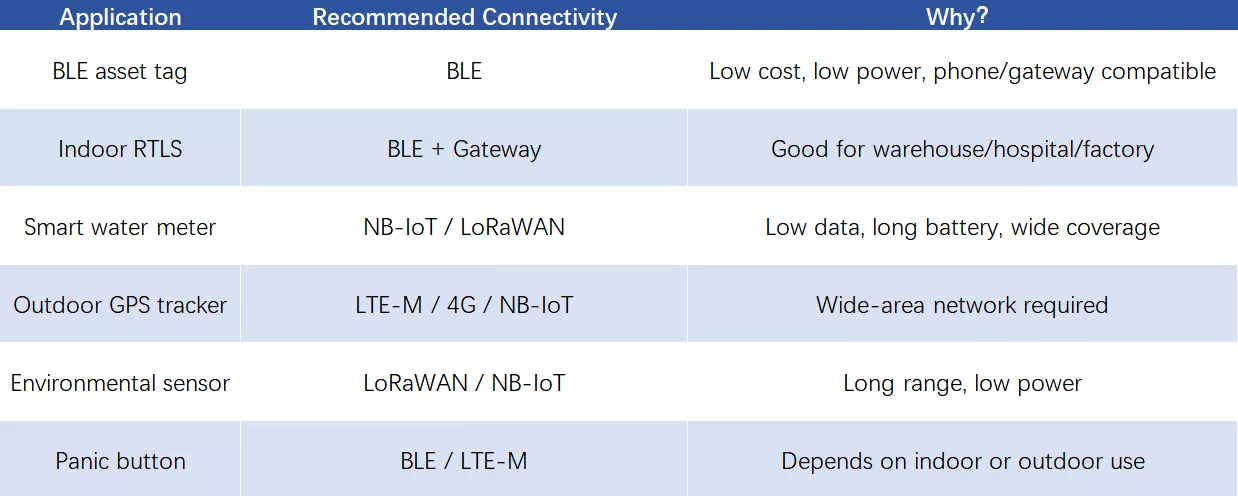
Don’t Forget Country and Network Availability
One important point is often missed: LTE-M and NB-IoT are not equally mature in every country.
Before hardware design, the project team should confirm the target market, frequency bands, operator coverage, SIM solution, certification requirements, and real network performance. A module that works well in one country may not be the best choice in another.
For global logistics or export products, this step is especially important.
Conclusion: Start from the Use Case, Not the Chipset
Choosing IoT connectivity is not about picking the newest technology. It is about matching the device to the real application.
If the device is low-cost and short-range, BLE may be enough. If it is fixed and only sends small data, NB-IoT or LoRaWAN may be better. If it moves outdoors and needs location tracking, LTE-M or 4G is usually more realistic.
At Edroptech, we help customers evaluate connectivity based on product size, battery life, application scenario, target country, certification, and mass production feasibility. Whether you are developing a BLE asset tag, a smart meter NB-IoT device, a LoRaWAN sensor, or an LTE-M GPS tracker, the best decision always starts from the real use case.
“After choosing a connectivity direction, the next challenge is turning it into a reliable product.”