
Choosing the right manufacturing partner is one of the most critical decisions an IoT company can make. The right factory does far more than assemble hardware—it becomes a long-term partner that directly impacts product quality, scalability, cost efficiency, and time-to-market.
This article introduces a two-phase evaluation framework designed to help IoT companies systematically assess manufacturing partners—from technical alignment and engineering depth to commercial execution and operational reliability.
Phase 1: Strategic Alignment & Core Capability Assessment
1. Technical Expertise & Industry Experience
Vertical Domain Experience
Not all IoT experience is transferable. A factory that specializes in smart home sensors may not be well suited for vehicle tracking devices or industrial asset trackers. Always verify whether the factory has produced products similar to yours by reviewing past project case studies and physical samples. Real-world experience in your specific application domain significantly reduces risk during mass production.
Technical Understanding
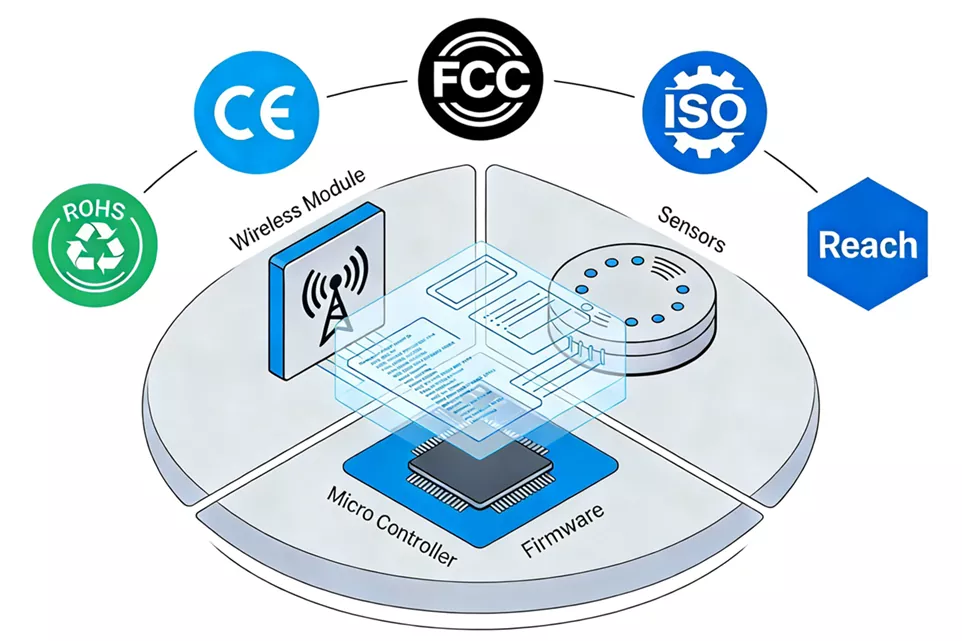
A qualified IoT manufacturing partner should demonstrate a deep understanding of your product’s technical foundation, including:
-
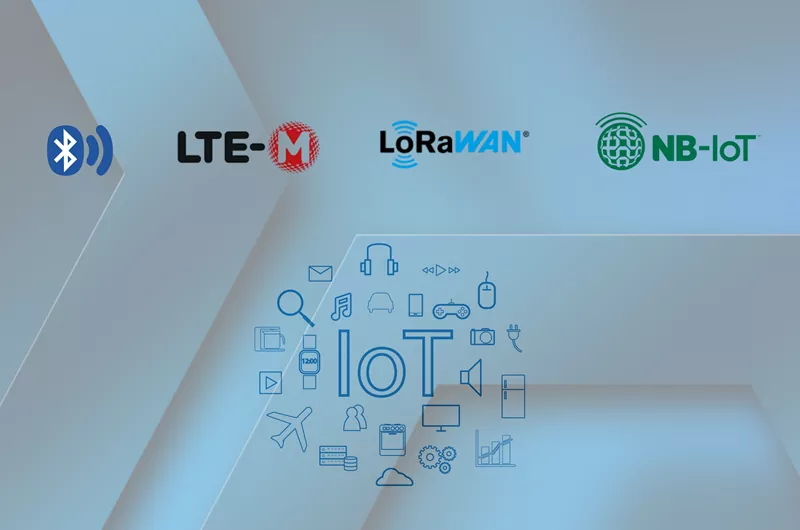
Wireless communication modules (Wi-Fi, Bluetooth, Zigbee, NB-IoT)
-
Sensor integration
-
Ultra-low-power design
-
Firmware flashing and configuration
More importantly, they should proactively offer DFM (Design for Manufacturability) recommendations—helping optimize cost, reliability, and yield—rather than simply manufacturing according to drawings.
Certification & Compliance Capabilities
This is a non-negotiable requirement, not a value-added bonus.
Confirm whether the factory holds recognized quality system certifications such as ISO 9001, and whether it can support mandatory market certifications, including:
-
CCC (China)
-
CE / RED (European Union)
-
FCC / UL (United States)
Without certification support, mass production for target markets may be delayed—or entirely blocked.
2. Manufacturing & Supply Chain Capability
End-to-End Production Coverage
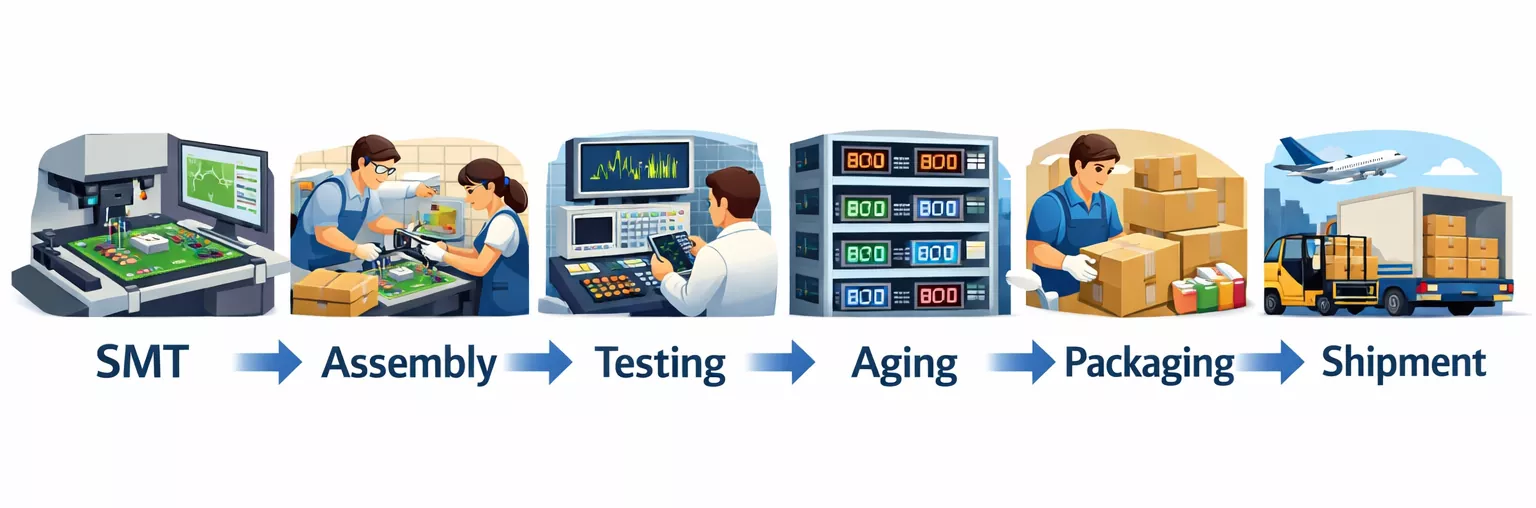
A strong IoT manufacturing partner should support the entire production lifecycle, including:
PCBA (Core Capability)
-
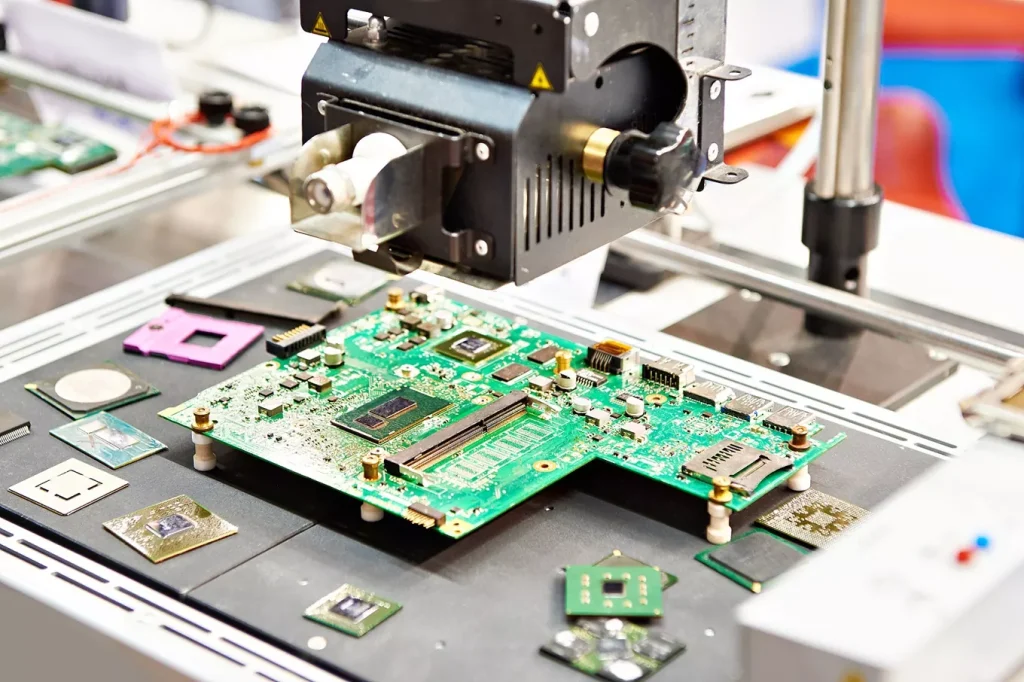
In-house SMT production lines
-
Proven experience with MCUs such as ESP32 or Nordic series
-
Programming and on-line flashing capability
Assembly & Testing
-
Mechanical assembly (housing, sealing, waterproofing)
-
Firmware flashing
-
Functional testing
-
Aging and reliability testing
-
Packaging
Ask whether the factory uses self-developed or automated test fixtures, as this directly affects test consistency and scalability.
Supply Chain Management
Can the factory manage component sourcing and inventory planning?
This is especially critical for IoT products, where MCUs and wireless modules often face shortages and price volatility. Evaluate the factory’s:
-
Supplier network stability
-
Risk control strategy for key components
-
Buffer stock and long-term material planning
3. Quality Management System
Quality Control Processes
A reliable factory should operate a complete and well-documented quality control framework, including:
-
IQC – Incoming Quality Control
-
IPQC – In-Process Quality Control
-
FQC – Final Quality Control
-
OQC – Outgoing Quality Control
Also verify whether the factory maintains a dedicated testing laboratory, such as:
-
RF testing facilities
-
Environmental and reliability testing equipment
Defect Rates & Issue Handling
Request historical defect data, typically expressed in PPM (parts per million).
In addition, evaluate the factory’s:
-
Rework and repair procedures
-
Root cause analysis capability
-
Traceability and recall mechanisms for batch-level quality incidents

4. R&D & Engineering Support
DFM & DFT Capabilities
This is where top-tier factories create exceptional value.
Assess whether the engineering team can review:
-
Schematics
-
PCB layouts
-
Mechanical 3D drawings
And propose improvements that:
-
Reduce manufacturing cost
-
Improve yield and stability
-
Enhance testability
NPI (New Product Introduction) Process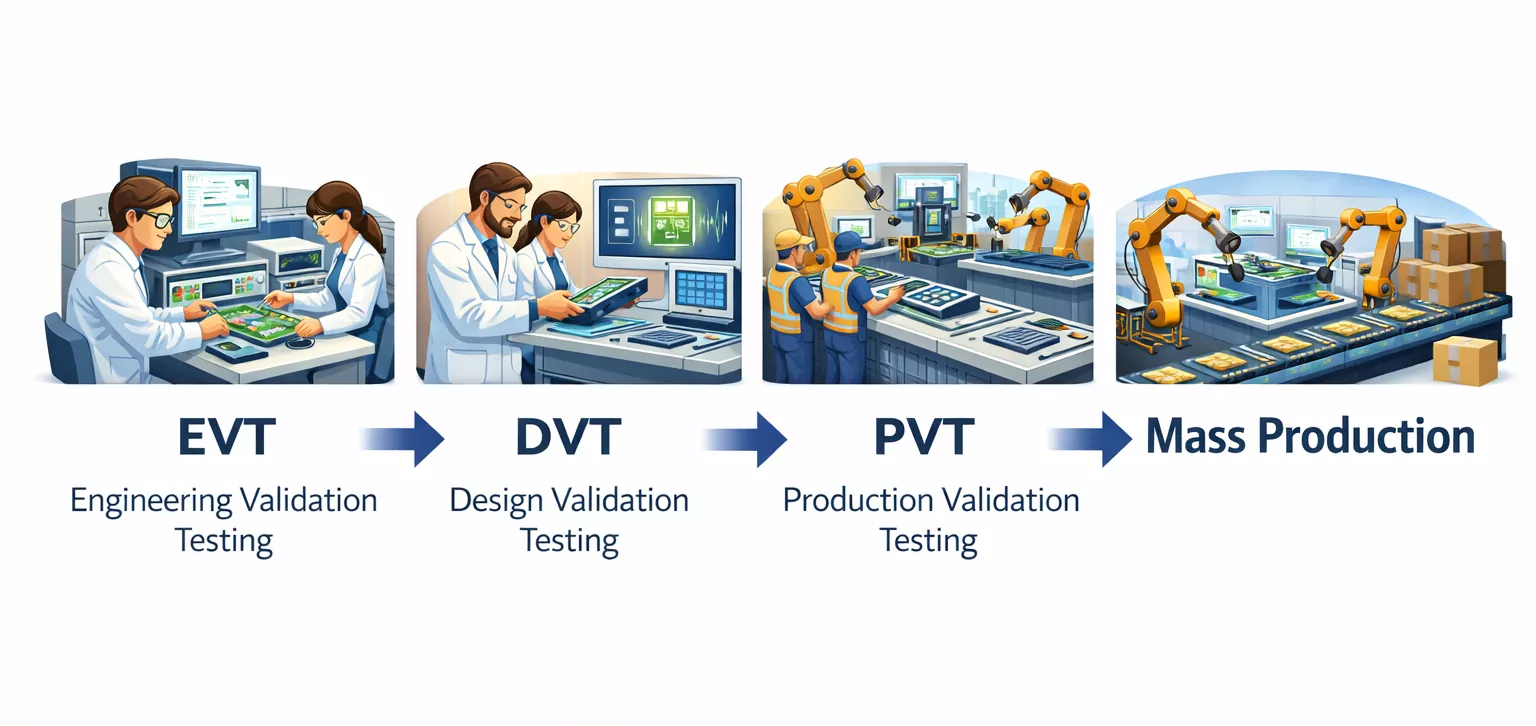
A structured NPI process is essential for smooth mass production:
-
EVT – Engineering Validation Test (prototype stage)
-
DVT – Design Validation Test (pilot production)
-
PVT – Production Validation Test (mass production readiness)
A well-managed NPI process often determines whether a product successfully scales—or fails before launch.
Phase 2: Commercial & Operational Considerations
5. Cost Structure & Pricing Model
Cost Transparency
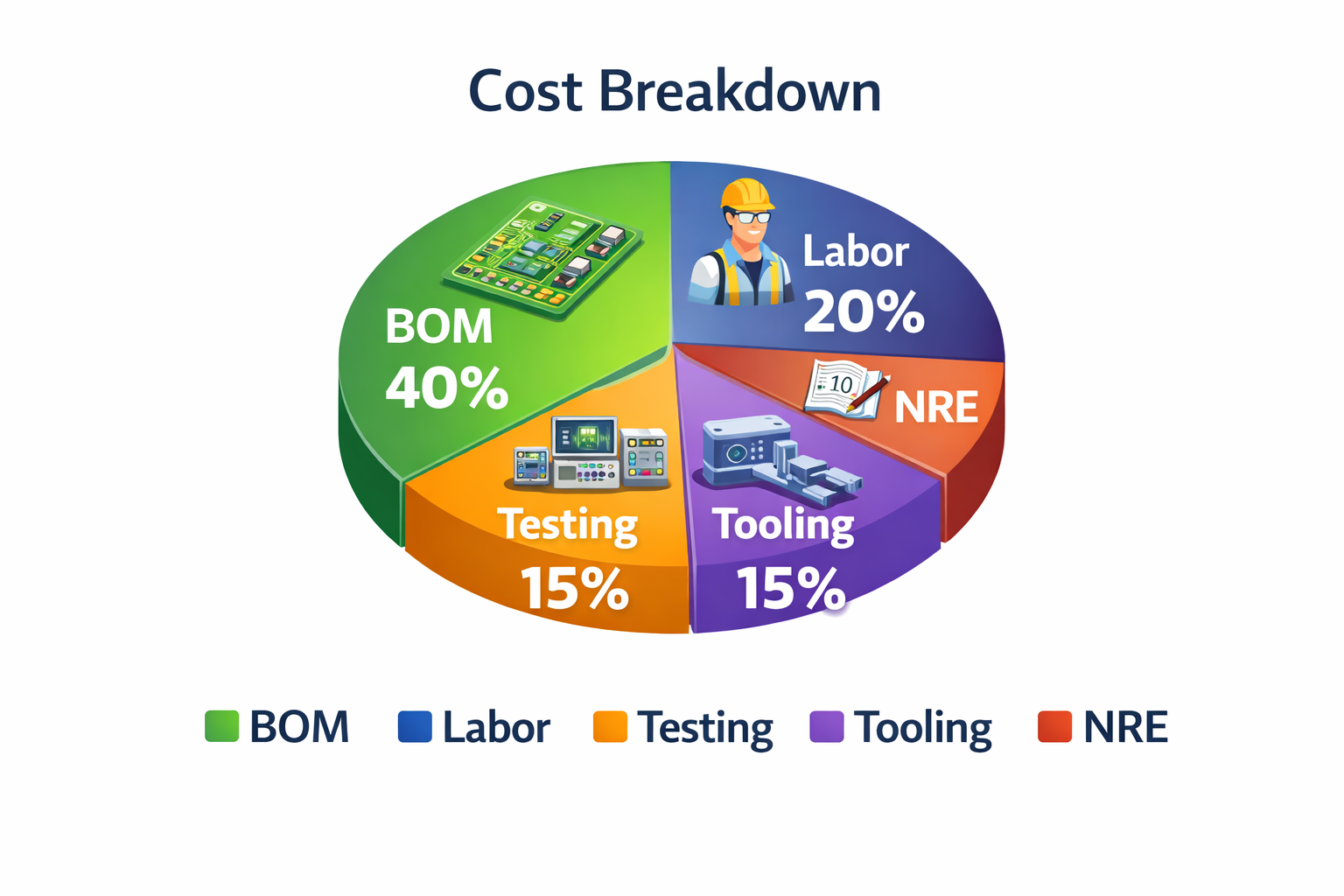
Request a fully itemized quotation, including:
-
BOM cost
-
PCBA processing
-
Assembly
-
Testing
-
Overhead
-
Margin
Be cautious of factories that only provide a single “lump-sum” price without cost breakdowns.
MOQ & Price Tiers
Clarify:
-
Minimum Order Quantity (MOQ)
-
Unit price changes at different volume levels
This is especially important for startups and early-stage products, where demand forecasting may be uncertain.
Tooling & NRE Costs
If enclosure tooling is required, confirm:
-
How mold costs are calculated
-
Who owns the tooling
Also review NRE (Non-Recurring Engineering) fees, such as:
-
Test fixture development
-
Production line setup
These costs should be transparent and reasonable.
6. Capacity, Delivery & Logistics
Production Capacity
Ensure the factory’s available capacity aligns with your demand forecast.
Ask whether capacity is guaranteed during peak seasons.
Lead Time
Confirm the standard lead time from order placement to shipment.
In many cases, key material lead time—especially chips—is the primary constraint.
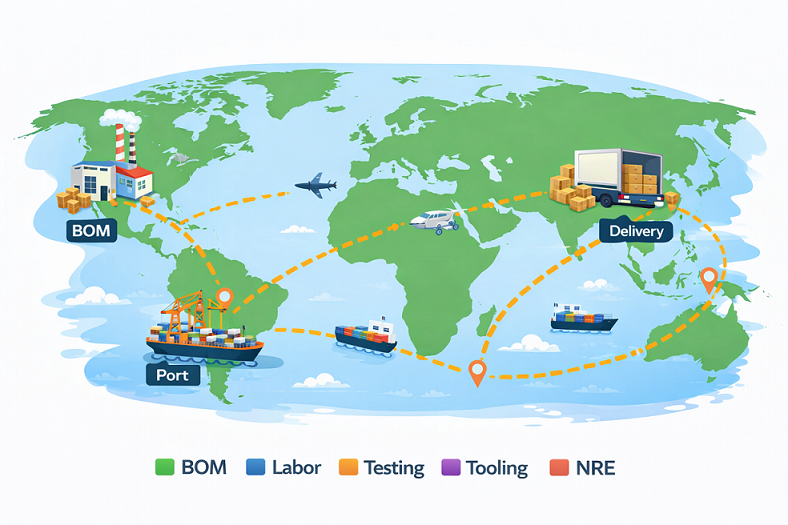
Logistics & Warehousing
Check whether the factory provides:
-
Warehousing services
-
Shipping terms (EXW, FOB, etc.)
-
Assistance with customs clearance and export documentation
7. Communication, IP Protection & Contract Terms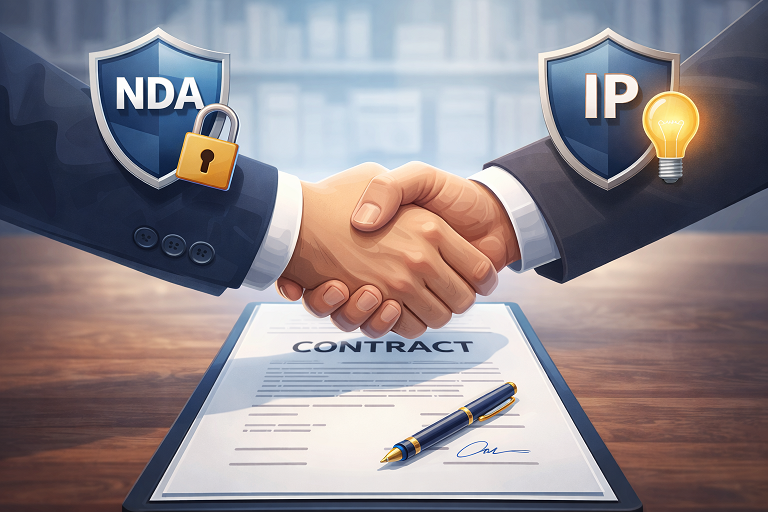
Communication Efficiency
Is there a dedicated Project Manager (PM)?
Evaluate:
-
Response speed
-
Technical communication clarity
-
Language compatibility
Intellectual Property Protection
A strict NDA is mandatory.
Contracts should clearly state that:
-
All design files
-
Firmware and software
-
BOM and documentation
are 100% owned by you and may not be reused for other customers or internal products.
Contract TermsCarefully review:
-
Payment structure (typically staged: deposit + balance before shipment)
-
Quality warranty clauses
-
Liability for delays or defects
-
After-sales support and RMA handling
Final Thoughts
Choosing an IoT manufacturing partner is not simply about price—it is about capability, transparency, and long-term alignment. A structured evaluation across technical, operational, and commercial dimensions significantly reduces risk and builds a strong foundation for scalable success.
When you treat your factory as a true partner rather than just a supplier, the value created extends far beyond the production line.