
From Prototype to Mass Production: How Connectivity Affects IoT Product Design
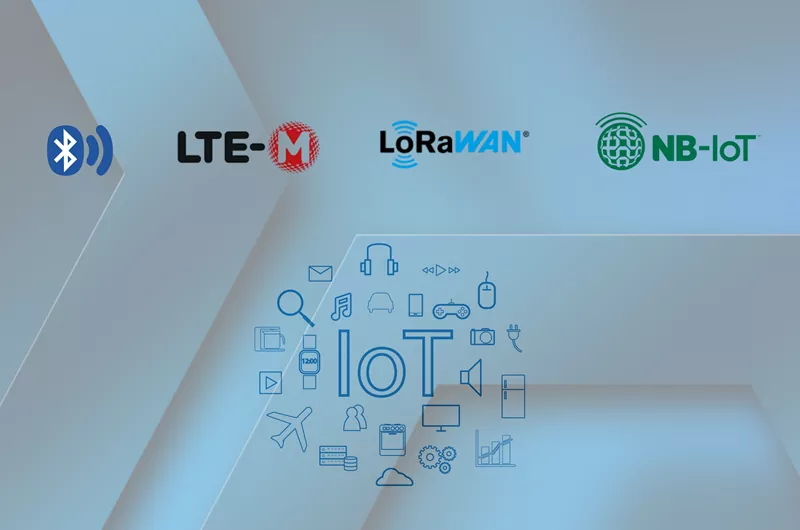
When developing a new IoT device, many customers think connectivity is just about choosing a wireless module. For example, “Should we use BLE, LoRaWAN, LTE-M, or NB-IoT?”
But in real IoT product design, connectivity is much more than a communication feature. It affects the hardware, antenna, battery life, firmware, certification, cloud platform, app experience, testing process, and even mass production.If the wrong connectivity is selected at the beginning, the project may face redesign, poor signal performance, short battery life, certification delays, or unstable performance after launch.
Connectivity Is Not Just a Module
A BLE tag, a LoRaWAN sensor, an LTE-M device, and an NB-IoT product may look similar from the outside, but their internal design logic is very different. BLE is often used for short-range devices, such as asset tags, wearables, sensors, and indoor positioning products. It usually has a lower hardware cost and works well with mobile apps or gateways. LoRaWAN is more suitable for long-distance, low-data applications, such as smart meters, environmental sensors, parking sensors, or agriculture devices. LTE-M and NB-IoT are 3GPP-standardized LPWA technologies. They are designed for low-cost, long battery life, wide coverage, and massive IoT connections. Because cellular IoT uses licensed spectrum and SIM-related security mechanisms, it is often preferred for managed networks and large-scale deployments.
That is why IoT connectivity design should be considered at the very beginning, not after the hardware is already finished.
Hardware Design: Module, Antenna and Structure
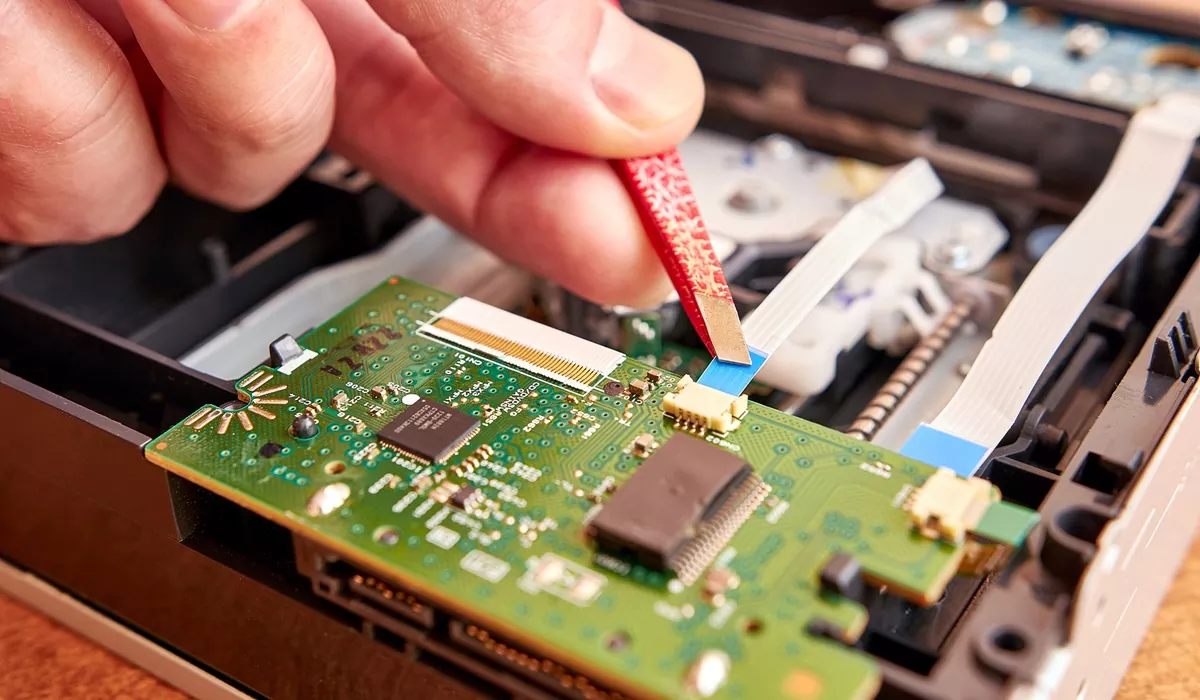
Connectivity directly affects hardware design.
For BLE product development, the hardware can be compact and cost-effective, but antenna design and power tuning are still important. If the antenna is blocked by the battery, metal parts, or poor PCB layout, the actual range may be much shorter than expected. For LoRaWAN device development, antenna efficiency, transmit power, and regional frequency bands are key points. A device for Europe, the US, Japan, or Southeast Asia may require different frequency planning. For LTE-M and NB-IoT products, the team must consider module selection, supported bands, SIM or eSIM, antenna space, enclosure material, and certification requirements. Small devices such as trackers or wearables are especially challenging because antenna space is limited.
This is where an experienced IoT ODM company can help reduce project risk from the early design stage.
Battery Life: More Than Battery Capacity
Many customers say, “We need three years of battery life.” But battery life depends on much more than the battery size. It is affected by data upload frequency, BLE broadcasting interval, GPS positioning frequency, sleep current, working temperature, signal strength, and network reconnection times.
For example, a BLE tag broadcasting every 100 ms will consume much more power than one broadcasting every 2 seconds. A LoRaWAN sensor uploading once per day may work for years, while one uploading every few minutes may not. For LTE-M or NB-IoT devices, weak signal areas can increase power consumption because the device may keep searching or reconnecting to the network.
So before confirming the battery target, the real usage scenario must be clearly defined.
Firmware and Data Strategy
Different connectivity technologies need different firmware logic. BLE devices may broadcast data, connect with an app, or be scanned by gateways. LoRaWAN devices usually send small data packets at low frequency or only when events happen. LTE-M and NB-IoT devices may need scheduled uploads, alarm reporting, OTA updates, data caching, and network retry logic. A good data strategy helps reduce power consumption, lower data cost, and improve system stability. The device should not send unnecessary data. The firmware, gateway, cloud platform, and app should work together as one system.
Certification and Market Access
Connectivity also affects certification.
BLE products may need Bluetooth qualification and regional certifications such as CE, FCC, UKCA, RCM, or TELEC.
LoRaWAN products must follow regional frequency regulations and may also need LoRaWAN certification depending on the project.
LTE-M and NB-IoT products may require CE, FCC, RCM, TELEC, PTCRB, GCF, or operator-specific approval, depending on the target market.
Because different countries use different frequency bands and certification rules, the target market should be confirmed early.
From Prototype to Mass Production
Connectivity should be verified step by step.
In the prototype stage, the main goal is to confirm whether the selected connectivity fits the application.
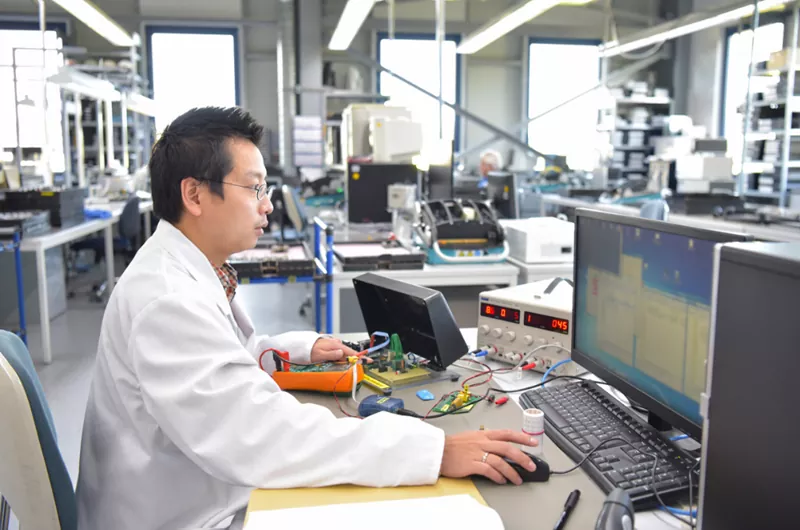
In EVT, the team tests antenna performance, power consumption, communication stability, and basic firmware logic.
In DVT, the focus moves to enclosure design, reliability testing, and certification preparation.
In PVT, the production process is verified, including firmware flashing, RF testing, calibration, assembly, and test fixtures.
In mass production, every device needs stable programming, functional testing, battery checks, aging tests, and outgoing inspection.
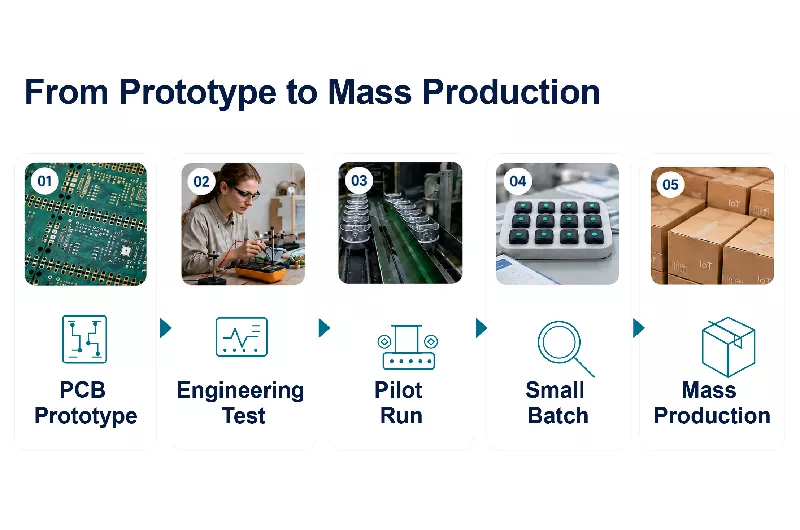
For an IoT ODM company, the real value is not only making a prototype. It is helping customers move from idea to pilot run and finally to stable mass production.
When Hybrid Connectivity Makes Sense
Sometimes one wireless technology is not enough.
BLE + LTE-M can support indoor positioning and outdoor data upload.
BLE + LoRaWAN can use BLE for local configuration and LoRaWAN for long-distance reporting.
BLE + NB-IoT can support mobile app maintenance and low-frequency cellular upload.
GNSS + LTE-M is common for outdoor tracking.
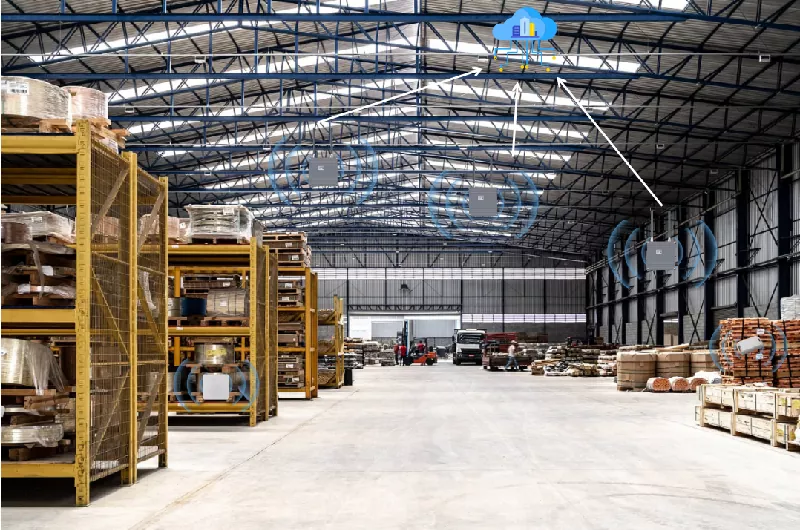
BLE + Gateway + Cloud is widely used in warehouse, hospital, and smart building asset management.
Hybrid connectivity can make a product more flexible, but it also increases design complexity. The key is to balance user experience, power consumption, hardware cost, cloud architecture, and production feasibility.
Final Thoughts
Connectivity is one of the most important decisions in IoT product development. It affects the whole product, from hardware and firmware to certification and mass production.
The earlier the connectivity strategy is discussed, the easier it is to avoid redesign, delays, and unnecessary cost.
Whether you are developing a BLE device, LoRaWAN sensor, LTE-M device, or NB-IoT product, the right connectivity design will make your product more reliable, scalable, and ready for the real market.
IoT Product Development / IoT ODM Service / Custom IoT Device Development