
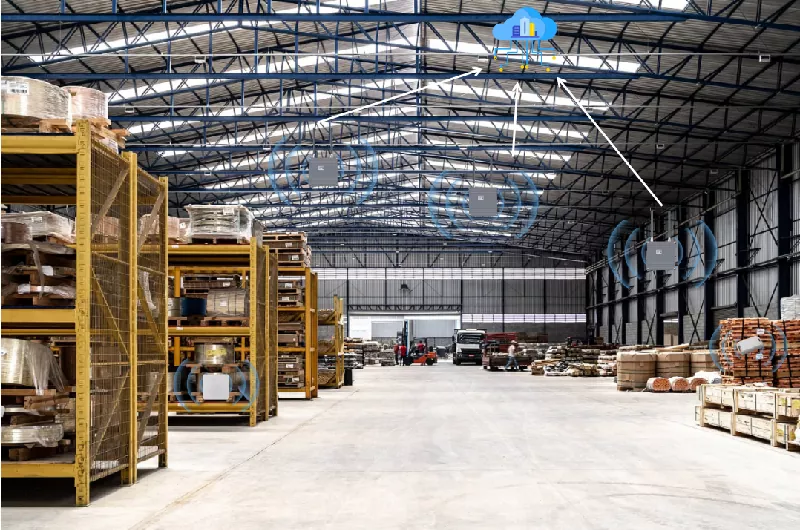
Many customers ask the same question when starting a BLE tracking project: “Can your BLE tag be detected 100% of the time?”
It is a fair question. In a clean testing room, BLE detection can look very stable. A tag is placed close to a gateway, there are no metal racks, no moving people, no vehicles, and no strong wireless interference.
But real environments are much more complicated. In warehouses, hospitals, vehicles, and industrial sites, BLE signals are affected by metal, Wände, menschliche Körper, device orientation, gateway position, and other wireless devices. This is why BLE testing results often differ from real field deployment. BLE is a practical and mature technology, but it is still an RF technology. And RF signals are always influenced by the environment.
How BLE Detection Actually Works
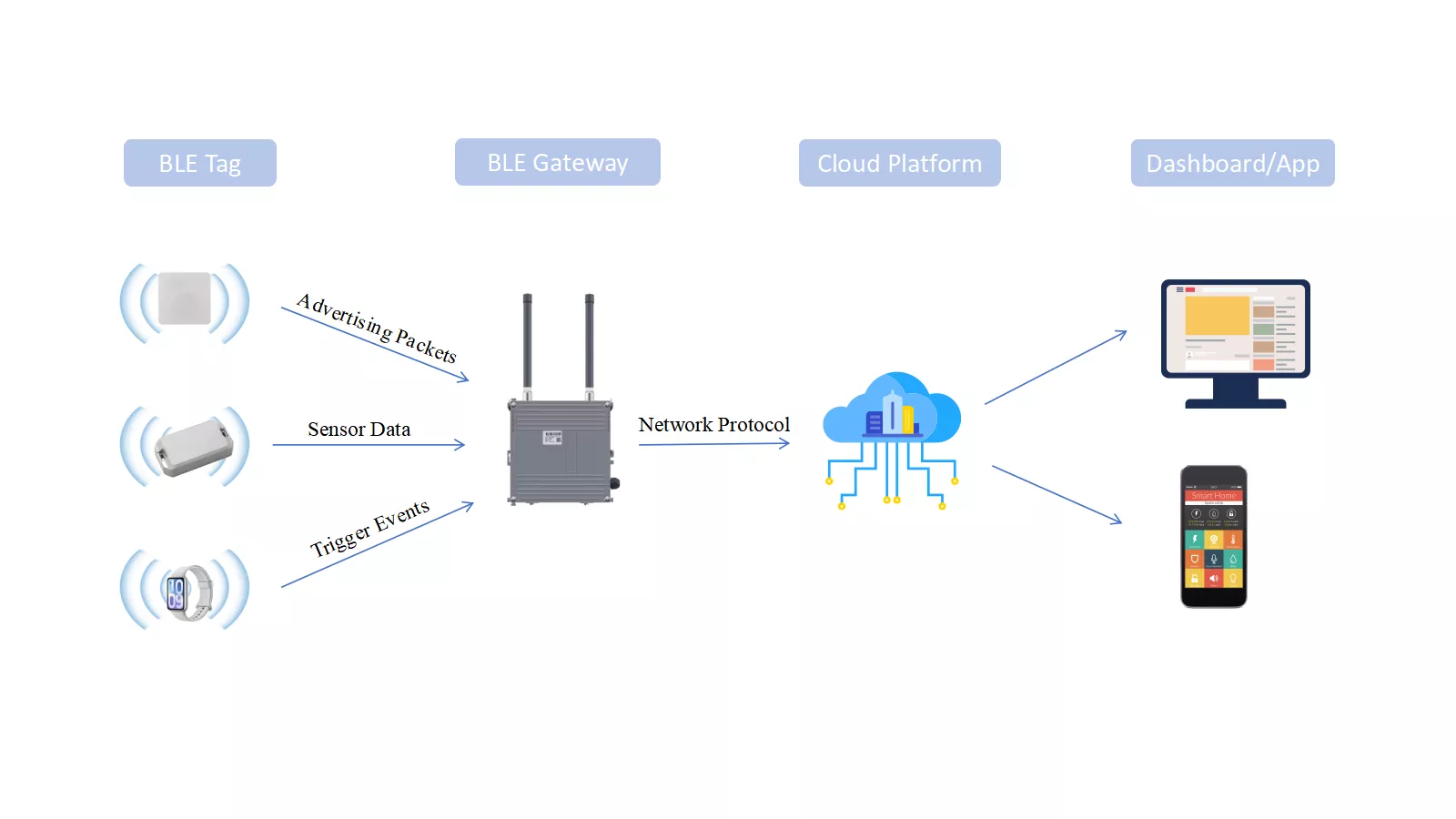
Most BLE tags do not keep a continuous connection with the gateway. Instead, they send advertising packets at regular intervals. These packets usually include the device ID, Batteriespiegel, Sensordaten, or other customized information. The BLE gateway scans nearby signals, receives the packet, reads the RSSI value, and uploads the data to the cloud platform. RSSI means Received Signal Strength Indicator. In einfachen Worten, it shows how strong the received signal is. Jedoch, RSSI is not a fixed distance value. It can change because of walls, metal objects, people, antenna direction, or how the device is installed.This is why a BLE tag may sometimes look “near” and sometimes look “far,” even when the real position has not changed much.
Warum 100% Detection Is Unrealistic
In real-world projects, promising 100% BLE detection at every second is not realistic. Several factors can affect the signal.
RF Signal Reflection
BLE signals can bounce when they meet walls, floors, machines, shelves, or vehicles. Sometimes this helps the signal reach the gateway. Sometimes it makes the signal unstable.
Metal Interference
Metal is one of the biggest challenges for BLE asset tracking. Metal racks, containers, trucks, cabinets, and machines can block or reflect signals. If a tag is attached directly to metal without proper design, the detection range may drop significantly.
Human Body Absorption
BLE works in the 2.4 GHz band, and human bodies can absorb part of the signal. This is common in wearable BLE devices, panic buttons, staff badges, and healthcare tracking projects.
Environmental Noise
BLE shares the 2.4 GHz band with Wi-Fi and many other wireless devices. In offices, hospitals, Einkaufszentren, and factories, signal noise and packet collision may happen.
Gateway Placement Issues
Sometimes the BLE tag is not the main problem. The gateway position is. If the gateway is blocked by metal, installed too far away, or placed in the wrong direction, detection stability will be affected.
Key Factors Affecting BLE Performance
BLE performance is not decided by one single parameter. It depends on hardware, Firmware, Antennendesign, gateway deployment, and real site conditions.
Advertising Interval
A shorter advertising interval usually improves detection speed, but it also consumes more battery. Zum Beispiel, emergency buttons may need faster advertising, while long-life asset tags may use longer intervals to save power.
Transmission Power
Higher transmission power may increase range, but it also increases power consumption. In dense deployments, too much power may also create more signal overlap.
Antenna Design
Antenna design is critical for BLE product development. PCB-Layout, antenna position, Gehäusematerial, battery location, and product size can all affect RF performance.
Firmware Optimization
Firmware settings such as advertising mode, sleep strategy, Datenformat, and power management can strongly affect detection stability and battery life.
Device Orientation
A BLE tag may perform differently when facing upward, downward, toward the gateway, or away from the gateway. Installation method matters in real projects.
Real-World Examples
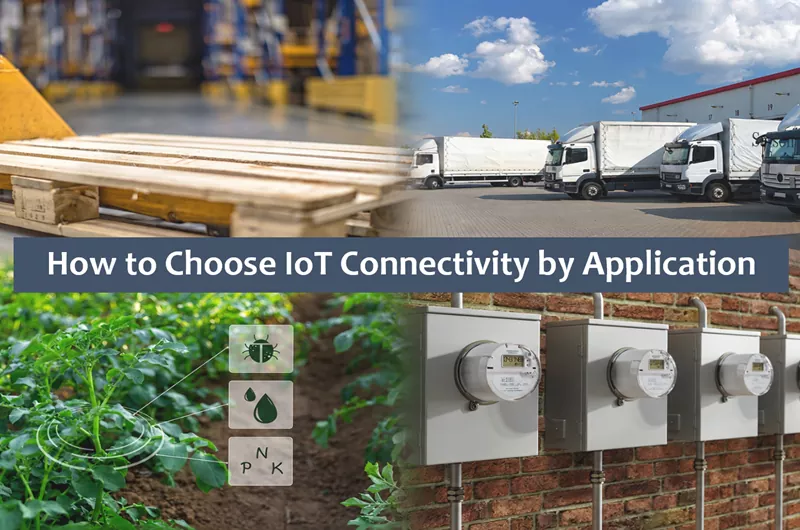
In warehouses, metal racks, Paletten, forklifts, and changing layouts can reduce BLE detection stability. Gateway density and placement are very important.
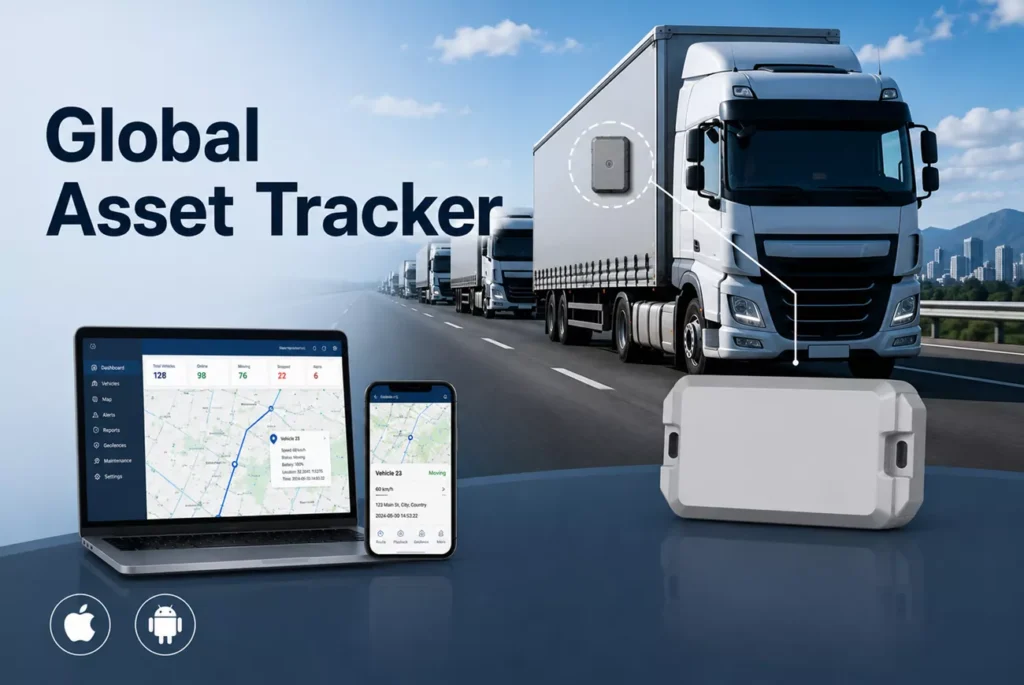
In vehicles, truck bodies, metal doors, engines, and movement can affect the signal. The gateway and tag positions need to be tested carefully.
In hospitals, Wände, people, beds, Aufzüge, and medical equipment create a complex RF environment. For healthcare projects, stable detection is usually more important than long range.
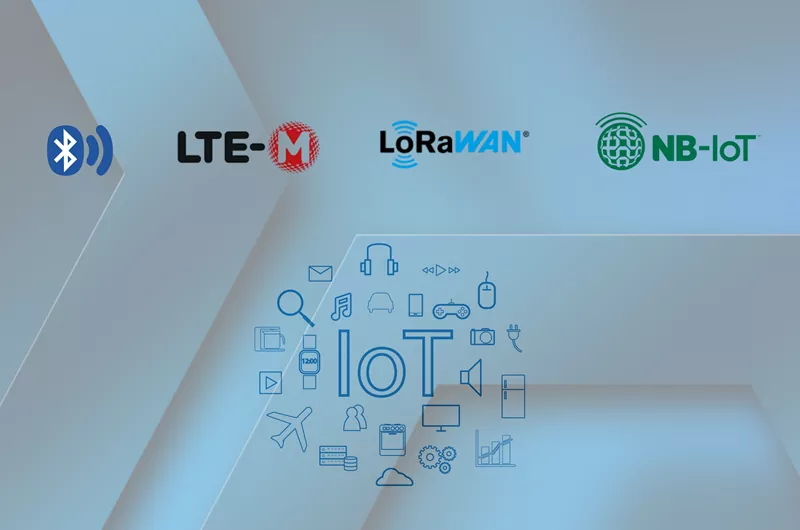
In outdoor industrial sites, large machines, containers, steel structures, and long distances may affect BLE performance. Sometimes BLE needs to work together with LTE-M, NB-IoT, LoRaWAN, or GPS.
Industry Benchmarks
For most BLE asset tracking projects, the goal should not be “100% detection every second.” A better goal is stable detection within an acceptable time window.
Zum Beispiel, warehouse inventory may not need second-level detection. If the asset can be detected several times within a few minutes, it may already support the workflow. But for panic buttons or safety alerts, the system needs faster response and stronger redundancy.
So the real question should be: “What detection rate and response time does this application actually need?” In real IoT projects, “stable enough” is often more valuable than theoretical perfection.
Best Practices to Improve BLE Stability
BLE performance can be improved through proper design and deployment.
First, gateway placement should be planned based on the real site layout, not just datasheet distance. Metal racks, Wände, ceiling height, power supply, and network access should all be considered.
Second, BLE parameters should be tuned for the application. Advertising interval, transmission power, scanning window, and data upload frequency should match the customer’s use case.
Third, real-site calibration is important. Testing only in an office is not enough if the product will be used in a warehouse, Krankenhaus, vehicle, or factory.
Endlich, pilot deployment is highly recommended before mass rollout. A pilot test helps verify the tag, Tor, Firmware, Cloud-Plattform, installation method, and user workflow.
Abschluss
BLE is a mature, low-power, and cost-effective technology for IoT asset tracking, Gesundheitspflege, Logistik, smart buildings, and industrial applications. Jedoch, 100% BLE detection is difficult in real-world environments because RF signals are affected by metal, Wände, people, noise, Antennendesign, firmware settings, und Gateway-Platzierung. A successful BLE project should not only focus on theoretical specifications. It should focus on engineering optimization, real-site testing, and deployment quality. With the right product design and gateway strategy, BLE can be stable enough for real business use.