
소규모 ODM과 대규모 제조업체: Which IoT Manufacturing Partner Is Right for Your Project?
Choosing the right manufacturing partner is a key decision for any IoT hardware project. It can affect development speed, product quality, 비용 통제, and how smoothly your product moves from concept to market.
Many companies first think of large manufacturers because they usually have bigger factories, mature supply chains, automated production lines, and strong purchasing power. For stable, high-volume products, large manufacturers can be a very good choice.
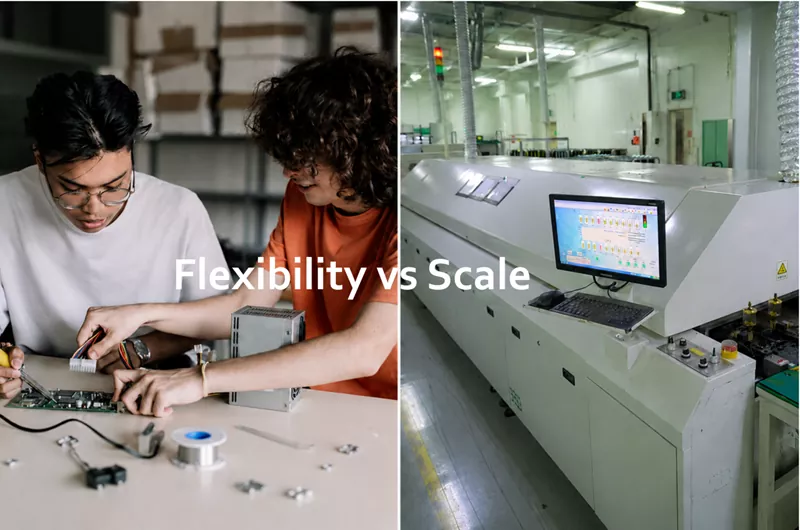
하지만, many IoT projects do not start with mass production. They usually begin with an idea, a prototype, a proof-of-concept project, or a small pilot run. At this stage, flexibility and engineering support are often more important than factory size.
What Makes a Small ODM Company Different?
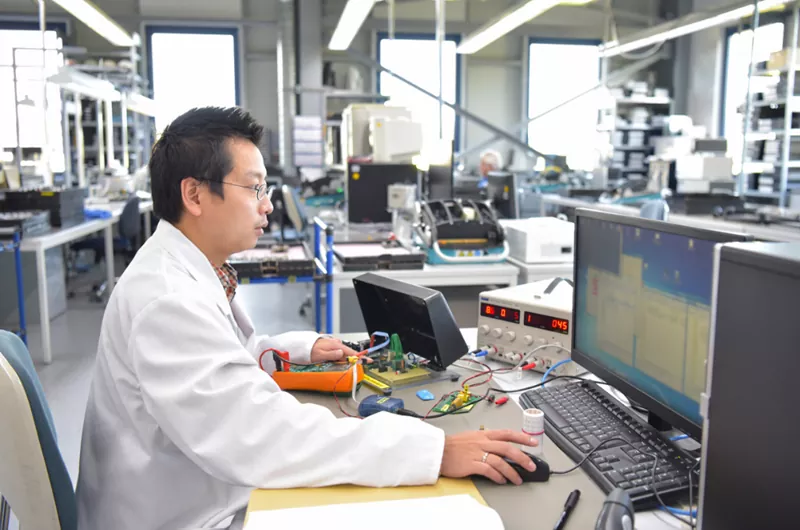
A small ODM company can be a better fit for early-stage IoT development. ODM means Original Design Manufacturer. Unlike a traditional OEM factory that mainly produces based on finished customer designs, an ODM company can support product design, 하드웨어 개발, 펌웨어 개발, 테스트, 생산 준비.
In real IoT projects, this support is very important. A simple BLE tracker, smart sensor, or asset tag may involve many technical details, such as battery life, antenna performance, 펌웨어 로직, 방수 구조, 센서 통합, and installation method. These details often need to be adjusted during development and field testing.
Real IoT Projects Need More Than Standard Manufacturing
예를 들어, a customer may want a BLE tag for logistics tracking. At first, the requirement may sound simple: small size, 저렴한 비용, and long battery life. But during development, many practical questions appear.
Should the product use a coin cell battery or a printed battery? Will the signal be stable when attached to cardboard, plastic, or metal? Should the tag support NFC activation, motion detection, or temperature sensing?
These questions require engineering discussion, not just factory production.
Why Small ODMs Work Well for Prototyping and Customization
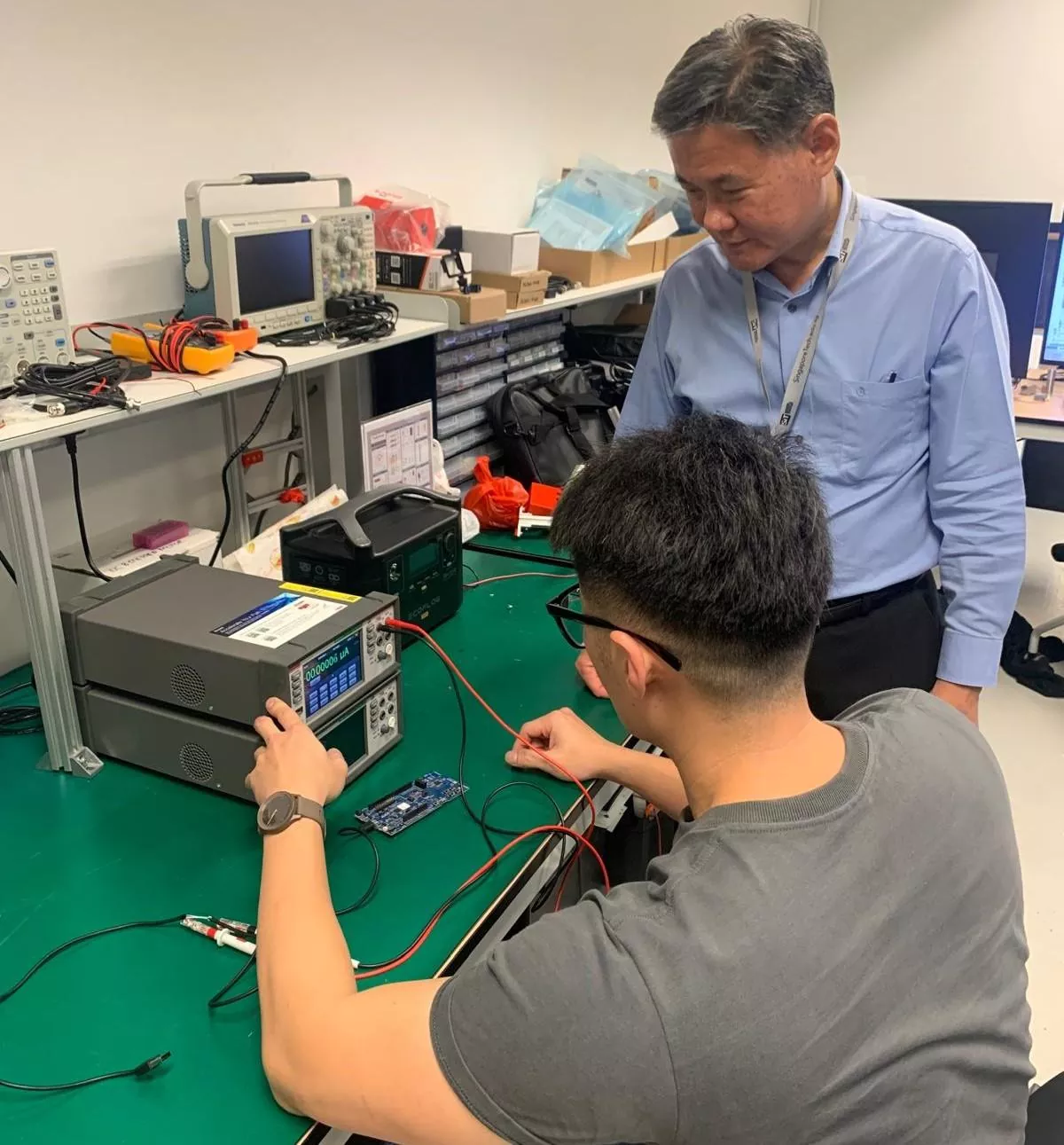
Small ODM companies are usually more flexible in this process. They can respond faster, support smaller batches, and work closely with customers to adjust the product based on real application needs. This is especially helpful for startups, MVP projects, customized IoT hardware, and low-volume pilot deployments.
Another advantage is communication speed. In large factories, even a small change may need to pass through several departments. In small ODM teams, project managers and engineers often work more closely together, so technical feedback can be faster and more direct.
Small ODM companies also usually offer lower MOQ options. This allows customers to test the market first instead of investing heavily in large inventory before the product is fully validated.
When Large Manufacturers Become the Better Choice
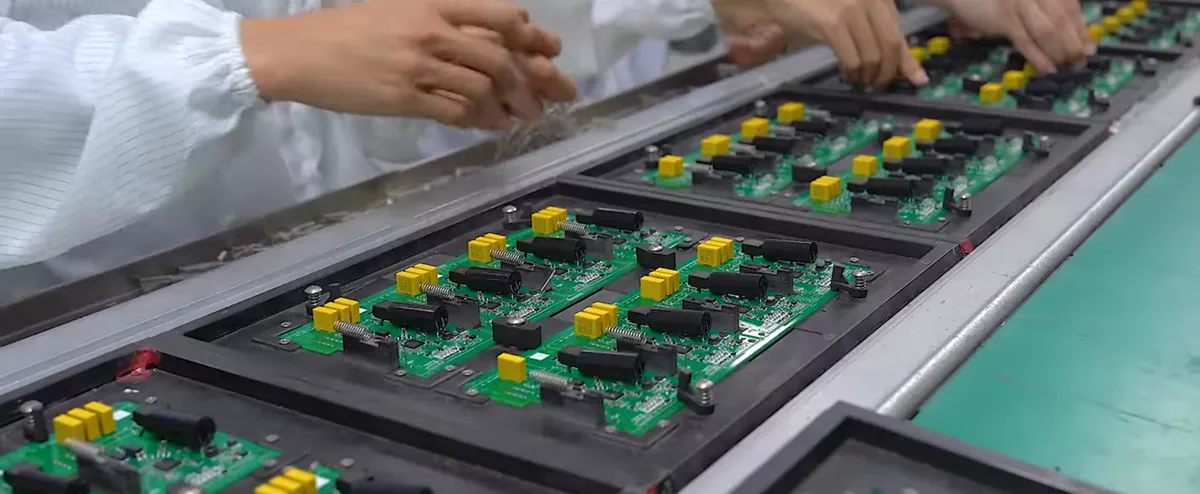
물론, large manufacturers also have clear advantages. Once the product design is stable and order volume becomes high, large factories can provide stronger production capacity, better automation, mature quality systems, and better cost efficiency.
For mature IoT products with fixed specifications, large manufacturers can be a strong long-term partner. They are especially suitable for standardized devices, high-volume production, and projects where the main goal is cost optimization.
적합한 IoT 제조 파트너를 선택하는 방법
그래서, which partner is better?
The answer depends on your project stage. If your product is still being developed, tested, or customized, a small ODM company may help you move faster and reduce risks. If your product is mature, standardized, and ready for large-scale production, a large manufacturer may be the better choice.
In many IoT projects, the best strategy is a hybrid model: start with a small ODM partner for product development, 프로토타이핑, and pilot production, then move to larger-scale manufacturing when the product and market demand become stable.
There is no perfect manufacturer for every project. The right partner is the one that fits your current product stage, technical needs, and business goals.
If you are developing an early-stage IoT product, you may also like:
“Why Startups Prefer Small ODM Companies for IoT Product Development”